Table of Contents
The Laila Peak expedition ranks among the most rewarding climbs available in Pakistan. This adventure takes place deep in the Karakoram range, where the landscape feels wild and untouched. Laila Peak Pakistan stands at 6096 m and draws experienced mountaineers who seek a genuine technical challenge combined with extraordinary scenery. The peak sits quietly in the Hushe Valley, a lesser-visited corner of Gilgit-Baltistan that remains peaceful and authentic. Its sharp, spear-like form makes it instantly recognizable even from the valley floor below. People who have completed the Laila Peak climb often describe the experience as both demanding and deeply satisfying because of the mix of steep ice, rock sections and sweeping panoramas that include K2, Masherbrum and the famous Gondogoro La.
K2 Trekking and Expedition handles this expedition with a practical approach rooted in years of work across the Karakoram. The company knows the local routes, weather patterns and community connections in northern Pakistan. From the moment of arrival in Pakistan through to the return journey, the focus remains on clear communication and steady progress. Many climbers mention in Laila Peak expedition reviews how the organized support allowed them to stay focused on the mountain itself rather than logistics. This article walks through the full details of the Laila Peak expedition, covering the route, daily flow, challenges and what makes this peak special in the mountains of Pakistan.
Why K2 Trekking and Expedition Delivers the Laila Peak Expedition You Want
K2 Trekking and Expedition operates directly from bases in Skardu and Islamabad, which keeps everything close to the real starting points in the Karakoram. The team includes local mountain guides and porters who grew up in these valleys and understand the terrain in a way that comes only from lifelong familiarity. This local knowledge helps during every stage, whether dealing with sudden weather changes or choosing the safest paths across glaciers.
Safety receives constant attention throughout the trip. An experienced expedition leader stays with the group from day one, while base camp services cover hot meals, comfortable tents, reliable communication tools and basic medical supplies. The company takes care of all necessary permits and royalty fees ahead of time so climbers arrive without extra paperwork hanging over them. This setup builds confidence from the beginning and lets everyone concentrate on acclimatization and climbing rather than behind-the-scenes details. Climbers who return often say the consistent, no-nonsense support stands out as the main reason they recommend K2 Trekking and Expedition to others planning a similar journey.
Laila Peak Expedition Highlights
The Laila Peak expedition combines physical effort with moments of pure wonder that stay with you long afterward. Several features set this climb apart from other peaks in the region.
| Highlight | Short Description |
|---|---|
| Iconic Shape | Spear-like summit that creates striking silhouettes against the sky and draws attention from miles away. |
| Technical Climb | Mixed ice and rock sections on the northwest face that require precise footwork and tool use. |
| Panoramic Views | Wide-open sightlines to K2, Masherbrum and the dramatic Gondogoro La from the summit ridge. |
| Remote Location | Secluded Hushe Valley setting with traditional Baltistan villages and a sense of true isolation. |
| Glacier Trek | Approach route that winds across moraines and along active glaciers for an authentic high-mountain feel. |
| Summer Season | Generally stable conditions between June and August that improve chances for a clear summit window. |
| Experienced Support | Dedicated guides, porters, cooks and assistants who manage camp life and carry loads during the ascent. |
| Unforgettable Memories | A complete journey through remote Pakistan that leaves strong impressions of scale, beauty and personal achievement. |
These elements come together to create an adventure that feels both challenging and deeply worthwhile.
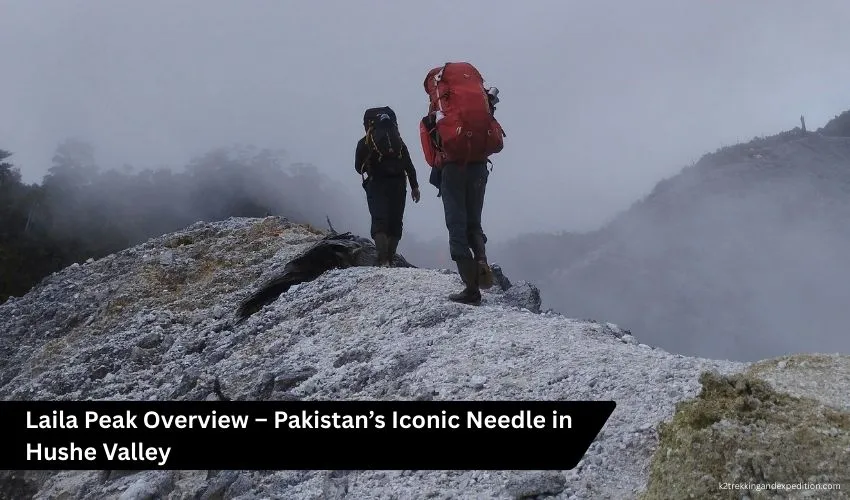
Laila Peak Overview – Pakistan’s Iconic Needle in Hushe Valley
Laila Peak rises as a standout feature located in the Hushe Valley within the Karakoram range in Pakistan. The mountain reaches 6096 m and catches the eye immediately because of its narrow, pointed summit that looks almost like a needle piercing the sky. This distinctive shape has made it one of the most photographed and talked-about peaks in the area. The northwest face in particular offers long, sustained lines that appeal to mountaineers looking for something more demanding than a straightforward trek.
The peak lies near the Gondogoro glacier and provides clear views toward several major summits in the range. Since the first ascent years ago, Laila Peak has attracted teams who appreciate its blend of technical difficulty and scenic payoff. Being located in the Hushe Valley means the approach begins from a small, traditional village where daily life still follows older rhythms. The surrounding landscape feels vast and powerful, with steep slopes, deep valleys and constant reminders of the scale of the Karakoram. Laila Peak stands as a classic example of what draws people to climb in this part of northern Pakistan—a sharp, beautiful summit that rewards effort with sweeping vistas of the Karakoram.
Laila Peak Expedition Itinerary
K2 Trekking and Expedition structures the Laila Peak expedition around a 16-day plan that accounts for travel, acclimatization, climbing time and safe return. The schedule begins in Islamabad and progresses through flights or road travel to Skardu, then onward to the Hushe Valley. Extra flexibility exists for case of flight cancellation or bad weather, especially on the flight to Skardu legs. The climbing block allows gradual height gain and multiple chances to wait for suitable conditions before the summit attempt.
Here is the complete day-by-day schedule:
Day 1: Arrival in Islamabad
Location: Islamabad. Altitude: 540 m.
Upon arrival in Islamabad, participants are welcomed by the expedition team and transferred to the hotel. The day includes an official briefing at the Alpine Club of Pakistan and a thorough equipment check to ensure readiness for the climb. Overnight stay in Islamabad.
Day 2: Fly to Skardu (2,228 m) or Drive via Karakoram Highway
Location: Skardu. Altitude: 2,228 m.
A thrilling one-hour flight to Skardu offers breathtaking views of the Karakoram, including glimpses of Nanga Parbat. In case of flight cancellations due to weather, the journey proceeds by road, a two-day drive along the spectacular Karakoram Highway. Overnight stay in Skardu or en route.
Day 3: Rest and Preparation Day in Skardu
Location: Skardu. Altitude: 2,228 m.
A day in Skardu allows participants to recover from travel and adjust to the altitude. The team finalizes expedition logistics and enjoys exploring the local bazaars and landmarks, such as Satpara Lake or the ancient Skardu Fort.
Day 4: Drive to Hushe Village (3,050 m)
Location: Hushe. Altitude: 3,050 m.
A scenic jeep ride through lush valleys and rugged terrains takes the team to Hushe, the gateway to Laila Peak. The Balti village offers a glimpse into local culture and hospitality. Overnight in a guesthouse or tents.
Day 5: Trek to Laila Peak Base Camp (4,000 m)
Location: Base Camp. Altitude: 4,000 m.
The trek begins with an awe-inspiring journey through the Hushe Valley. The route traverses glacial paths and moraines, offering views of towering peaks. Base camp is established at 4,000 m with all facilities needed for the expedition.
Day 6-12: Acclimatization and Climbing Period
Location: Climbing Days. Altitude: C1 5,000 m, C2 5,500 m, Summit 6,096 m.
These days are dedicated to acclimatization, establishing higher camps and preparing for the summit push. Climbers ascend intermediate camps, practice technical maneuvers and wait for optimal weather conditions to make the final ascent. The climb involves steep, technical sections, demanding both physical fitness and climbing expertise. Reaching the summit rewards participants with panoramic views of the Karakoram giants, including K2, Masherbrum and Gondogoro La.
Day 13: Descend to Hushe Village
Location: Hushe. Altitude: 3,050 m.
After a successful climb, the team retraces their steps back to Hushe. The descent is a time for reflection and celebration. Overnight in Hushe.
Day 14: Drive Back to Skardu
Location: Skardu. Altitude: 2,228 m. The journey back to Skardu offers another opportunity to take in the breathtaking landscapes of the region. The evening is spent relaxing and exploring Skardu.
Day 15: Fly/Drive to Islamabad
Location: Islamabad. Altitude: 540 m.
Depending on weather, the team either flies back to Islamabad or embarks on the overland journey via the Karakoram Highway. Free time in Islamabad for shopping or sightseeing.
Day 16: Departure
Location: Airport ISB. Altitude: 540 m.
The expedition concludes with a transfer to the airport for international departures. The team bids farewell, carrying memories of a lifetime.
For quick reference, here is a summary table:
| Day | Altitude | Location | Key Activity |
|---|---|---|---|
| 1 | 540 m | Islamabad | Arrival, briefing, equipment check |
| 2 | 2,228 m | Skardu | Flight to Skardu or road drive |
| 3 | 2,228 m | Skardu | Rest, preparation, local exploration |
| 4 | 3,050 m | Hushe | Drive to Hushe Village |
| 5 | 4,000 m | Base Camp | Trek to Laila Peak base camp |
| 6-12 | Up to 6,096 m | Climbing Days | Acclimatization, camps, summit attempt |
| 13 | 3,050 m | Hushe | Trek back to Hushe |
| 14 | 2,228 m | Skardu | Drive back to Skardu |
| 15 | 540 m | Islamabad | Fly or drive to Islamabad |
| 16 | 540 m | Airport ISB | Departure |
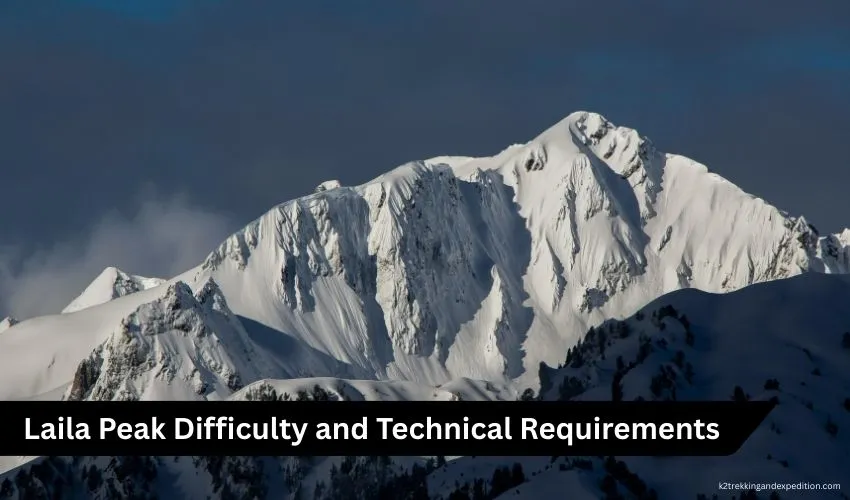
Laila Peak Difficulty and Technical Requirements
The Laila Peak difficulty stems mainly from its steep angles, variable snow and ice conditions and the need for solid technical skills at high altitude. This peak does not suit beginners. Participants should already have experience using crampons, ice axes and ropes on mixed terrain. Long climbing days combined with thinner air demand strong endurance and careful pacing.
Physical preparation plays a large role because the route includes sustained effort over several days. Mental focus matters too, especially when moving through exposed sections or waiting out weather at higher camps. Teams that arrive well-trained and rested tend to handle the demands more comfortably.
Laila Peak Northwest Face Route Details
Most groups tackle the Laila Peak route by way of the northwest face. This side presents a long, unbroken slope that mixes hard ice with sections of rock and snow. Camps get placed around 5,000 m and 5,500 m to break the climb into manageable stages. Fixed ropes help secure the steeper parts, particularly where the angle reaches up to 45 degrees.
Lower down, the path crosses crevassed areas and seracs that require careful route-finding. Higher up, the face funnels into a sharper ridge that demands steady movement. Clear weather conditions make a noticeable difference in both safety and enjoyment along this face.
Laila Peak Summit Push and Final Ridge
The Laila Peak summit push usually begins early from the highest camp. The final section narrows into a steep ridge with significant exposure on either side. Climbers rely on front points and ice tools to navigate the last steep sections, which often hold slope of 45 degrees or greater. The narrow, pointed summit feels dramatic once reached.
The view from the top opens up in every direction, rewarding the effort with close-up sights of surrounding giants. Descent follows the same line back to lower camps, with careful attention to fatigue and changing conditions.
Laila Peak Altitude Profile and Acclimatization
Laila Peak altitude increases gradually from valley floors to the 6096 m summit, giving the body time to adapt if the schedule is followed carefully. The early days at lower elevations in Skardu and Hushe allow initial adjustment before heading higher. The climbing period includes deliberate rest and short ascents to build tolerance to thinner air.
Staying hydrated, eating well and moving slowly help reduce the effects of altitude. The plan spreads height gain across multiple days so climbers reach the top in the best possible condition.
Here is the altitude summary table:
| Day | Location | Altitude |
|---|---|---|
| 1 | Islamabad | 540 m |
| 2 | Skardu | 2,228 m |
| 3 | Skardu | 2,228 m |
| 4 | Hushe | 3,050 m |
| 5 | Base Camp | 4,000 m |
| 6-12 | C1 / C2 / Summit | 5,000 m to 6,096 m |
| 13 | Hushe | 3,050 m |
| 14 | Skardu | 2,228 m |
| 15 | Islamabad | 540 m |
| 16 | Airport ISB | 540 m |
Laila Peak Base Camp Trek from Hushe Valley
The Laila Peak base camp trek forms the important first step into the mountain environment. After arriving in Hushe Village at 3,050 m, the path heads up the valley on day 5. The trail crosses rocky moraines, follows the edges of glaciers and passes beneath towering rock faces and icefalls. Views open up steadily as the valley narrows and the surrounding peaks grow larger.
The trek itself remains accessible for people with good fitness, though the uneven ground and steady uphill sections require steady effort. Reaching base camp at 4,000 m feels like entering another world, with the sharp outline of Laila Peak now much closer. This approach trek gives climbers a real sense of the scale and isolation of the Karakoram and many find it as memorable as the climb that follows.
The Laila Peak expedition delivers a complete mountain experience that balances real challenge with lasting beauty. From the sharp summit to the wide views across the Karakoram, every part of the journey leaves a strong mark. If this climb sounds like the right fit for your next adventure, contact K2 Trekking and Expedition to discuss dates, preparation steps or any other details. The team stands ready to help you plan and join this special trip in northern Pakistan. Reach out today to get started.
Laila Peak Expedition Pakistan – Hushe Valley Climb in the Karakoram
The Laila Peak expedition brings climbers face to face with one of the sharpest and most photographed peaks in northern Pakistan. Laila Peak Pakistan rises to 6096 m in the quiet Hushe Valley and offers a blend of technical climbing and wide-open mountain scenery. Many search for the Laila Peak climb because it delivers real challenge without endless days of approach. K2 Trekking and Expedition takes care of the complete journey from arrival to departure.
The team manages every part so participants stay focused on the mountain. Details like the Laila Peak route choices the Laila Peak difficulty and the Laila Peak summit experience all come together in this adventure. Climbers often discuss the Laila Peak expedition cost during planning but the lasting value lies in the personal achievement and the views gained along the way.
Climbing Laila Peak – What the Route Involves
The Laila Peak climb follows a logical line that builds gradually from the valley floor to the pointed top. Teams work their way up the northwest face of Laila Peak where the terrain shifts between snow ice and rock. Steady progress matters because each section requires focus and good technique. The high altitude adds its own demands as the air becomes thinner and breathing grows heavier. The full Laila Peak route keeps things direct yet still tests physical and mental strength at every stage.
Fixed ropes appear on the steeper parts to add security during movement. Both the west face and northwest face can serve as options based on snow conditions but the primary path remains reliable year after year. The climb feels connected from start to finish with no wasted effort. Preparation with prior experience on similar ground makes the Laila Peak difficulty manageable while still rewarding.
Laila Peak Climb from Base Camp to Summit
Starting at the base camp of Laila Peak around 4000 m the route moves through rocky ground then onto glacier edges. Camp 1 gets set near 5000 m and Camp 2 follows at about 5500 m to allow rest and gradual height gain. Each carry involves short ascents followed by time at lower elevation so the body adjusts well. The summit attempt begins before dawn from the highest camp when the forecast looks favorable.
The final ridge narrows and steepens with sections reaching a slope of 45 degrees or more. Climbers rely on ice tools and front points to handle the exposed ground near the Laila Peak summit. The spear-like shape stands out clearly in these last hours and the feeling of accomplishment builds with every careful step. Once on top the entire landscape opens up. Descent returns along the same route with extra care for tired legs and changing light.
Views of K2 and Gondogoro La During the Laila Peak Expedition
Standing high on Laila Peak gives some of the clearest and most impressive sights in the Karakoram range. From the upper camps and especially at the Laila Peak summit the eye catches K2 rising large and unmistakable to the north. The Gondogoro La pass sits prominently with its wide saddle framed by ice and rock. These landmarks tie the whole region together in one sweeping view.
The vistas of the Karakoram stretch to include Masherbrum and other surrounding summits that fill the horizon. Light changes throughout the day so the same scene looks different from morning to afternoon. Many climbers pause during the climbing laila peak phase to absorb these sights because they add depth to the entire experience. Similar wide views appear on related trips like the K2 Base Camp Trek and Gondogoro La Trek which makes combining activities a natural choice for those who want more time in the area.
Laila Peak Gear List – Essential Equipment for the Climb
A solid Laila Peak gear list keeps everything running smoothly on mixed terrain and at high altitude. The right tools provide grip warmth and protection when needed most. K2 Trekking and Expedition reviews all personal and shared items during the initial briefing in Islamabad to catch any gaps early. The list below includes the main pieces that prove useful on this mountain.
| Item | Why You Need It |
|---|---|
| Ice Axe | Offers balance and quick self-arrest on steep ice along the northwest face. |
| Crampons | Delivers firm grip on hard snow and glacier surfaces during the full Laila Peak climb. |
| Climbing Harness | Secures connection to fixed ropes on exposed sections close to the Laila Peak summit. |
| Helmet | Guards against loose rock or falling ice from base camp to the top. |
| Mountaineering Boots | Maintains foot warmth and support on technical ground at higher elevations. |
| Layered Clothing | Handles temperature swings from warm valleys to cold summit winds. |
| Sleeping Bag | Keeps body heat during cold nights at Camp 1 and Camp 2. |
| Trekking Poles | Eases knee strain on the approach trek and descent paths. |
| Headlamp | Provides light for early morning starts on the summit attempt. |
| Sunglasses and Sunscreen | Protects eyes and skin from strong reflection at altitude. |
These essentials form the backbone of the Laila Peak gear list. Climbers often add small personal items but the core pieces listed here cover the primary requirements for a safe and focused trip.
Laila Peak Pakistan – Location and Access from Skardu and Islamabad
Laila Peak Pakistan occupies a secluded spot in the Hushe Valley deep within the Karakoram range. The peak belongs to Gilgit-Baltistan where traditional Baltistan villages and open landscapes create a peaceful setting. Travel starts in Islamabad with a quick flight to Skardu when conditions allow or a longer drive along the Karakoram Highway during bad weather. From Skardu a jeep track winds through green valleys to Hushe Village the natural entry point for the climb.
The journey from Islamabad to Skardu builds anticipation as the mountains appear larger with every passing kilometer. If flights face case of flight cancellation the road remains a dependable alternative even if it extends the travel time. Once in Hushe the path to the base camp of Laila Peak follows glacier edges and moraines with the iconic Laila Peak coming into view early. This remote yet accessible location keeps the Laila Peak expedition feeling distant from everyday life while still practical to reach.
Laila Peak Base Camp Trek Options
The approach to the base camp of Laila Peak provides flexible ways to enter the mountain zone. The direct route from Hushe Village covers the distance in one full day and follows open ground with constant sights of rising peaks. Some groups include brief side trips to nearby viewpoints for better acclimatization before settling at 4000 m. Others extend the walk through the valley to spend extra hours enjoying the surroundings.
The Laila Peak base camp trek suits different paces and can stand alone or connect to broader exploration. The trail stays straightforward and the effort remains reasonable for those with good fitness. Many link it with paths like the Gondogoro La Pass Trek or the Hushe Valley Trek to make the most of their time in the Hushe Valley. These choices allow people to adjust the trip to their preferences while still arriving at base camp prepared for the climb ahead.
Frequently Asked Questions
1. Where is Laila Peak located?
Laila Peak is located in the Karakoram Range of northern Pakistan in the Hushe Valley near Skardu. It is famous for its unique spear-shaped summit and stunning landscapes. Trekkers usually access it through Skardu and trek along scenic valleys and glaciers. The area offers some of the most breathtaking views in the region.
2. Is the Laila Peak Expedition safe?
Yes, the Laila Peak Expedition is safe when organized by experienced local operators. Guides ensure proper acclimatization and use reliable equipment. Weather conditions can change quickly so following instructions is essential. Many adventurers complete the trek successfully every season.
3. Do I need trekking experience for the Laila Peak Expedition?
Basic trekking experience helps but beginners can join with proper preparation. Fitness and stamina are more important than technical climbing skills. The trail includes moderate slopes and glacier walks which are manageable with guidance. Most operators provide training and support along the way.
4. Can solo women join the Laila Peak Expedition safely?
Yes, solo women can join the expedition safely with reputable organizers. Guides and local teams provide support throughout the trek. Staying with the group ensures security and assistance. Many solo women travelers have completed Laila Peak and shared positive experiences.
5. When do Laila Peak expeditions take place?
The best season for the Laila Peak Expedition is from June to September. Snow conditions are lighter and weather is more stable during this period. Early bookings are recommended as permits and accommodations fill quickly. Trekking in peak months provides clear skies and beautiful landscapes.
6. Which Laila Peak expedition is best for beginners?
The standard Laila Peak expedition via Hushe Valley is suitable for beginners. It has manageable slopes and reliable campsites along the route. Experienced guides offer technical support for easier climbing sections. This option balances adventure with safety for first-time trekkers.
7. What kind of visa is needed for the Laila Peak Expedition?
Travelers need a Pakistan tourist visa to join the Laila Peak Expedition. Visa can be obtained online or at embassies before arrival. Trekking permits are also required and are usually arranged by the expedition operator. Carrying identification is necessary during the trek.
8. Do Laila Peak expeditions have Wi-Fi or communication facilities?
Wi-Fi is not available during the trek and mobile coverage is limited. Some camps offer satellite phones or radio communication for emergencies. Travelers are advised to inform family before departure and carry basic communication devices. Remote locations add to the adventure and connection with nature.
9. How does the Laila Peak Expedition work?
The expedition begins from Skardu and includes trekking through Hushe Valley, setting base camps and acclimatization days. Experienced guides lead climbers along glaciers and snow slopes. Daily progress depends on weather and group pace. Most treks last about two weeks and provide a complete high-altitude experience.
10. Are Laila Peak expeditions suitable for adventure travelers?
Yes, Laila Peak expeditions are perfect for adventure travelers seeking scenic views and challenging climbs. It offers glacier trekking, steep slopes and remote valley experiences. Trekkers enjoy a mix of physical activity and stunning natural beauty. Many return with memories of the mountain’s iconic shape and serene surroundings.
Conclusion
The Laila Peak expedition stands as a complete mountain journey that combines real technical challenge with some of the most impressive scenery in the Karakoram range. From the sharp pointed Laila Peak summit to the steady climb along the northwest face and the wide vistas of the Karakoram that include K2 and Gondogoro La every part leaves a lasting mark. The Laila Peak altitude experience the careful acclimatization and the support from K2 Trekking and Expedition make the trip feel achievable for prepared climbers. Many who finish talk about the sense of accomplishment and the quiet beauty of the Hushe Valley long after they return home.
If this adventure matches what you are looking for reach out to K2 Trekking and Expedition for more information. The team can share details about available dates how to prepare or any other questions you have about the Laila Peak climb. Contact them today to start planning your own trip to this iconic peak in northern Pakistan.